





Education is a fundamental right, yet many learners in rural areas of South Africa face significant barriers that hinder their academic success and overall development.
These challenges stem from infrastructural, socioeconomic, and systemic disparities that create an uneven playing field. However, innovative solutions and collaborative efforts are helping bridge the gap and bring equitable educational opportunities to all learners.
Key Challenges Faced by Rural Learners
- Limited Access to Quality Infrastructure
- Many rural schools lack basic facilities such as libraries, laboratories, and safe classrooms.
- Poor roads and transportation often make accessing schools a daily struggle.
- Shortage of Qualified Educators
- Rural schools frequently face a scarcity of qualified teachers, especially in critical subjects like mathematics and science.
- Digital Divide
- Learners in rural areas often lack access to digital tools and internet connectivity, leaving them behind in the era of online education.
- Socioeconomic Challenges
- High poverty rates mean that many learners attend school hungry, lack proper uniforms, or drop out to support their families.
- Language Barriers
- Learners in rural areas may struggle with a curriculum taught in a language that is not their mother tongue, impacting comprehension and performance.

A rural South African school setting with learners studying under a tree due to a lack of classrooms,
Innovative Solutions and Opportunities
- Improving Infrastructure
- Government programs, like the Accelerated School Infrastructure Delivery Initiative (ASIDI), focus on building and upgrading schools in rural areas.
- Partnerships with private organizations can bring additional resources to create safe and functional learning environments.
- Empowering Educators
- Incentives such as housing allowances and career development opportunities can attract qualified teachers to rural areas.
- Training programs for existing teachers help improve classroom effectiveness.
- Bridging the Digital Divide
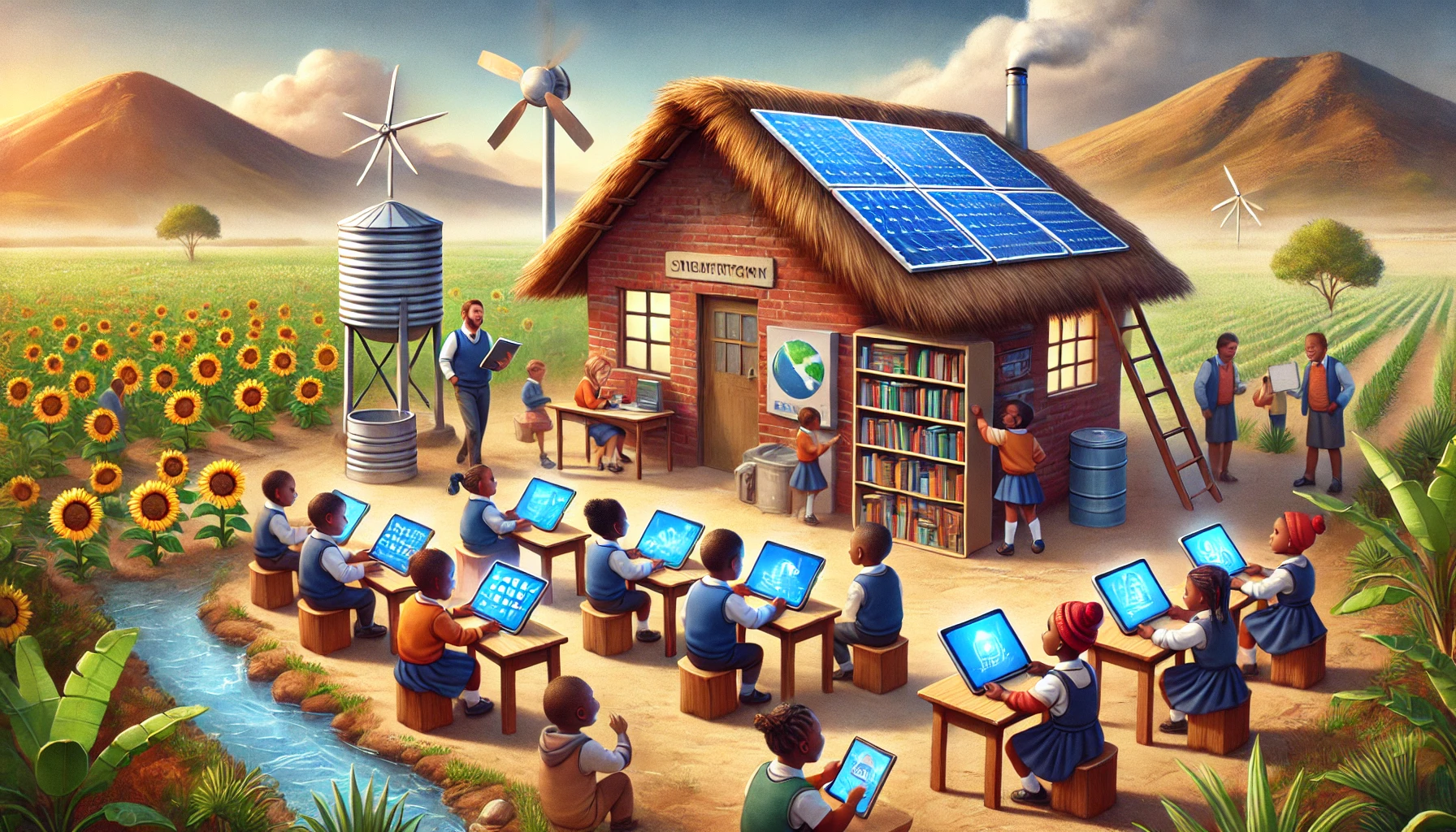
- Low-cost tablets and solar-powered learning tools are making technology accessible to learners in remote areas.
- Initiatives like EduFeed24 provide downloadable educational resources that can be accessed offline.
- Feeding Schemes and Support Programs
- School feeding schemes ensure that learners have access to nutritious meals, improving concentration and attendance.
- Community support programs engage local stakeholders to address challenges such as dropout rates and child labor.
- Promoting Multilingual Education
- Using indigenous languages alongside English ensures that learners grasp foundational concepts effectively.
The content on EduFeed24 is for informational and educational purposes only. Always consult relevant policies, laws, or professional advice for specific matters. For more information, please read our full Disclaimer.
The Role of EduFeed24 in Bridging the Gap
EduFeed24 is committed to making quality education accessible to all learners, regardless of their location. Our initiatives include:
- Free educational resources that can be downloaded and used offline.
- Tools and guides for teachers to create engaging lessons with limited resources.
- Affordable educational materials to support learners and educators in under-resourced schools.
Stay Connected with EduFeed24
Thank you for exploring this resource on EduFeed24. We are dedicated to simplifying educational resources and empowering learners, educators, and stakeholders in South Africa’s education sector. Be sure to stay connected with us for more insights, tips, and resources tailored to meet your needs.
Explore More from EduFeed24
PodcastYouTubeFreebiesShopPrivacyDisclaimer

Contact Us
For queries or support, email us at blog@edufeed24.co.za
Together, let’s continue to shape a brighter future for education!
EduFeed24 – Simplifying Educational Resources.